MAT187 L02-03 - Complex Numbers
Imaginary numbers are of the form
e.g.
Complex numbers are numbers of form
Real part of
Imaginary part of
Complex conjugate of
i.e.,
If a quadratic has no solution in the real numbers, it has complex solutions in the form of complex conjugates,
Operations with complex numbers
Basically just treat complex numbers as functions with an unknown variable (that being
Example:
Graphing complex numbers
We can graph a complex number by plotting
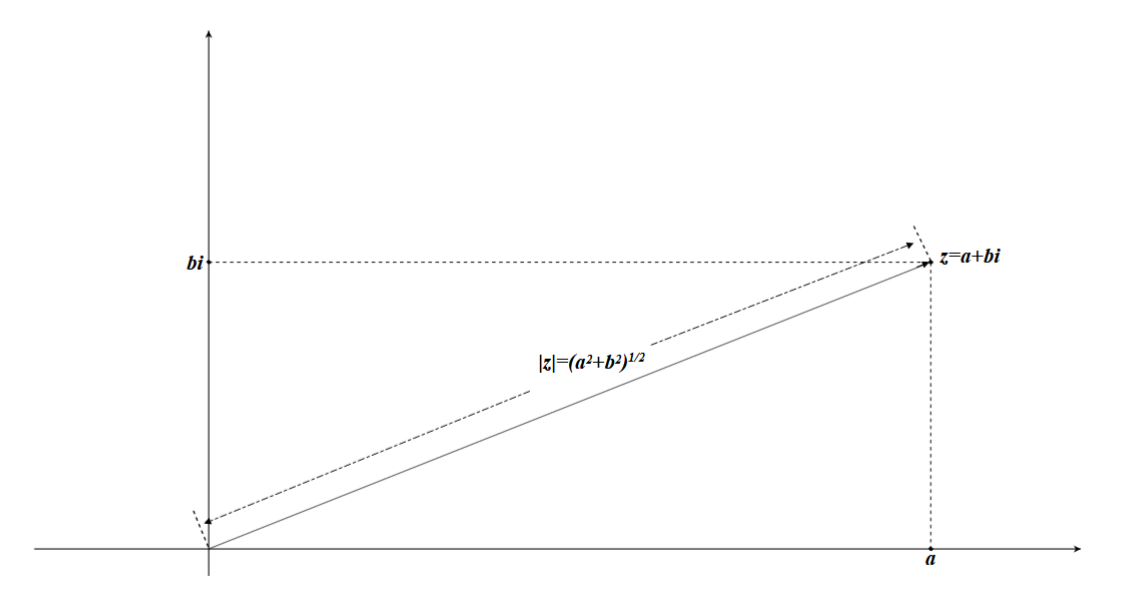
Modulus of a complex number, denoted by
Argument or phase of a complex number is the angle
Often denoted by
Important: there are technically infinitely many arguments for a complex number.
Similar to how there are infinitely manyfor any cartesian point, expressed in polar coordinates. There is only one modulus for a complex number, however.
Complex numbers in polar coordinates
Since we can represent complex numbers through moduli and arguments, it is fortuitous to convert them to polar coordinates.
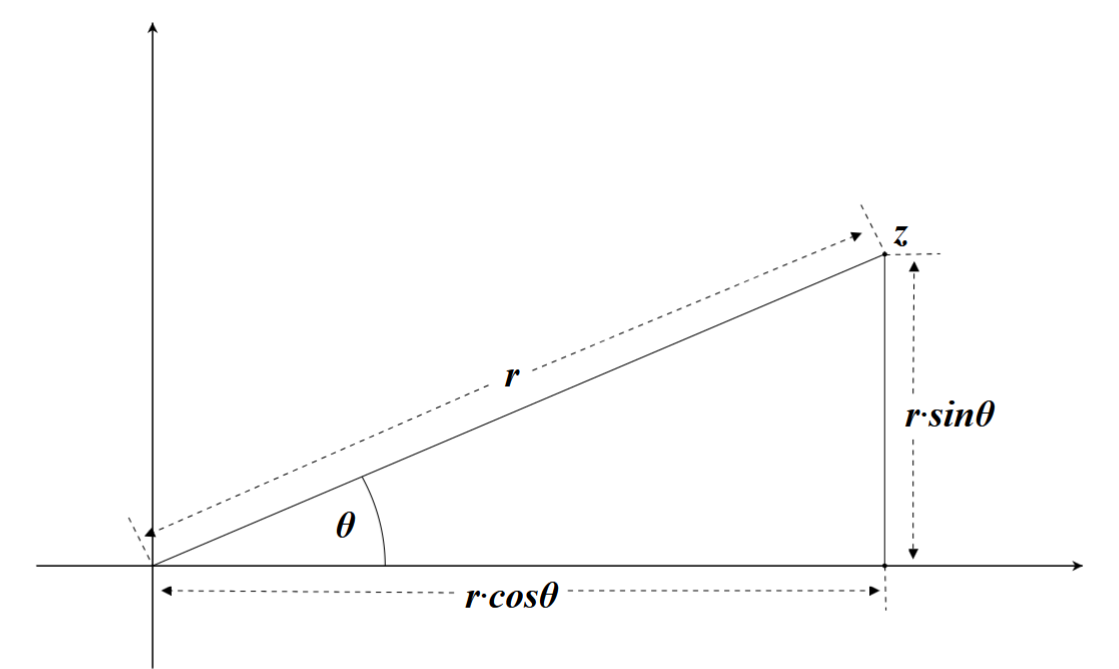
Converting complex numbers from polar to cartesian
If
Product of arguments
For complex numbers
Product of complex numbers
If
- Rotation of
by angle . If is not complex, then there is no rotation. - Scaling of
by factor of .
Euler's formula to represent complex numbers
Since writing out
Exponential notation of complex numbers
If you have a complex number